
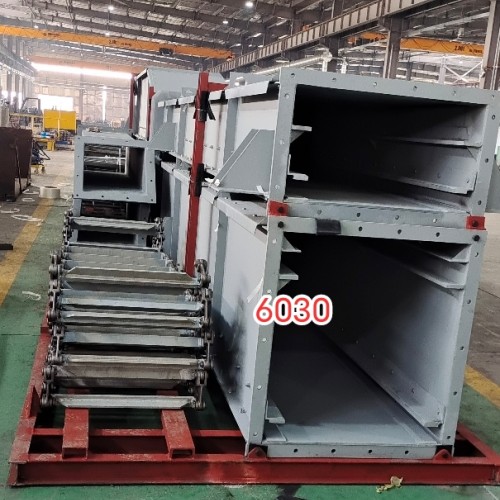
In the realm of bulk material handling, efficient and reliable equipment is crucial for seamless operations across various industries such as mining, cement, power generation, and chemical processing. One such essential piece of equipment is the bucket elevator, widely recognized for its capability to vertically lift and transport bulk materials with ease and precision. This article delves into the working principle of bucket elevators, highlighting their operational mechanism, types, and applications, while also introducing Jiangsu BOOTEC Engineering Co., Ltd., a renowned professional supplier of bulk material conveying system solutions and equipment.
### What is a Bucket Elevator?
A bucket elevator is a mechanical device used to transport bulk materials vertically or at a steep incline. It consists of a series of buckets attached to a belt or chain, which circulates around pulleys or sprockets to scoop up materials from a lower point and discharge them at a higher level. The continuous movement of buckets enables a steady and controlled flow of materials, making bucket elevators indispensable in various industrial processes.
### Working Principle of Bucket Elevators
The operational efficiency of bucket elevators is rooted in their simple yet effective working principle. The elevator typically comprises four main components: buckets, belts or chains, pulleys or sprockets, and a casing or housing to contain the components and material.
1. **Loading:** The process begins with buckets positioned at the lower pulley or sprocket engaging with the bulk material through a loading boot or hopper. As the belt or chain moves, the buckets scoop up the material from the loading point.
2. **Vertical Lifting:** Once filled, the buckets are lifted vertically along the elevator casing by the driving pulley located at the top. The buckets retain their materials due to the centrifugal force generated as they move upward, preventing material spillage during transportation.
3. **Discharge:** Upon reaching the top pulley, the buckets invert or rotate depending on the design, discharging the material into a chute or distributor. This is facilitated by gravity, ensuring a smooth transition of materials into the next stage of processing or storage.
4. **Return Cycle:** The empty buckets then travel downward on the return side of the belt or chain within the casing, ready to engage with new material at the loading point, completing the cycle.
### Types of Bucket Elevators
Bucket elevators are broadly categorized based on the transmission mechanism and application needs:
- **Belt Bucket Elevators:** Employ a continuous belt made of rubber, PVC, or synthetic materials. They are suited for handling lighter materials and operate with less noise.
- **Chain Bucket Elevators:** Utilize chains to which the buckets are fixed, ideal for transporting heavier or abrasive materials and capable of withstanding harsh operating conditions.
### Advantages of Bucket Elevators
- **High Efficiency:** Capable of transporting large volumes of material in a compact vertical space, maximizing plant layout efficiency.
- **Gentle Handling:** Minimizes product degradation by reducing impact and abrasion during transport.
- **Customizable Design:** Adaptable to various materials, inclines, and discharge heights.
- **Continuous Operation:** Allows for uninterrupted material flow critical in many industrial processes.
### Applications
Bucket elevators find extensive use in industries that require vertical conveying of bulk materials, including:
- Agriculture: Transporting grains, seeds, and fertilizers.
- Mining: Moving ores and minerals vertically within processing plants.
- Cement Industry: Handling raw materials like limestone and clinker.
- Power Plants: Conveying fly ash and bottom ash efficiently.
### Jiangsu BOOTEC Engineering Co., Ltd.: A Leader in Bulk Material Handling Solutions
Supporting the robust operation of bucket elevators is the comprehensive expertise and specialized equipment provided by leaders in the field such as Jiangsu BOOTEC Engineering Co., Ltd. The company stands out as a professional supplier offering turnkey bulk material conveying system solutions tailored to meet the unique demands of various industries.
Jiangsu BOOTEC Engineering Co., Ltd. excels in the design, production, sales, and after-sales service of bottom ash and fly ash handling systems, solidification systems, and their supporting equipment. Their profound technical knowledge and commitment to innovation enable them to deliver customized solutions that enhance operational reliability, reduce downtime, and improve overall processing efficiency.
By integrating advanced manufacturing techniques and stringent quality controls, Jiangsu BOOTEC Engineering Co., Ltd. ensures that the bucket elevators and associated systems they provide operate at peak performance. Their dedication to service and technical support fosters long-term partnerships with clients, helping them navigate challenges and achieve sustainable development in their operations.
### Conclusion
The bucket elevator remains a cornerstone technology in vertical bulk material handling, revered for its simplicity, efficiency, and adaptability. Understanding its working principle is essential for optimizing its use and integrating it effectively within broader material handling systems. Coupled with the expertise of professional suppliers like Jiangsu BOOTEC Engineering Co., Ltd., industries can leverage state-of-the-art equipment and comprehensive service to meet the evolving demands of production processes.
As industrial needs grow in complexity, the role of reliable bulk material conveying systems — particularly bucket elevators — becomes increasingly critical. Jiangsu BOOTEC Engineering Co., Ltd.’s commitment to innovation and quality ensures that enterprises have access to solutions that not only meet current requirements but are also scalable for future growth. This collaboration between advanced equipment and expert service drives enhanced productivity and operational success in bulk material handling worldwide.